Best Vivarium Branch Decor Kit: Safe Woods and Layout Tips
This post contains affiliate links. As an Amazon Associate I earn from qualifying purchases. Prices and availability are shown by Amazon and can change.
The best vivarium branch decor kit uses moisture-tolerant hardwoods such as cork bark, ghostwood, Malaysian driftwood or mopani, and avoids pine, cedar and eucalyptus. Check what every piece is made of, because mixed kits often add plastic vines and unknown wood. Live plants, leaf litter and a stable central piece of wood make a better frog layout than a crowded set of extras.
A decor kit saves time, but the label rarely lists the wood species. Frogs live on and against these pieces all day, so the material matters.
This guide explains which woods two dart frog care sources recommend, what to leave out, and how to arrange branches so frogs have height and cover.
How this was made: prepared with AI assistance and checked against the sources listed at the end. Images are AI-generated illustrations, not photographs of real animals or products.
Key Takeaways
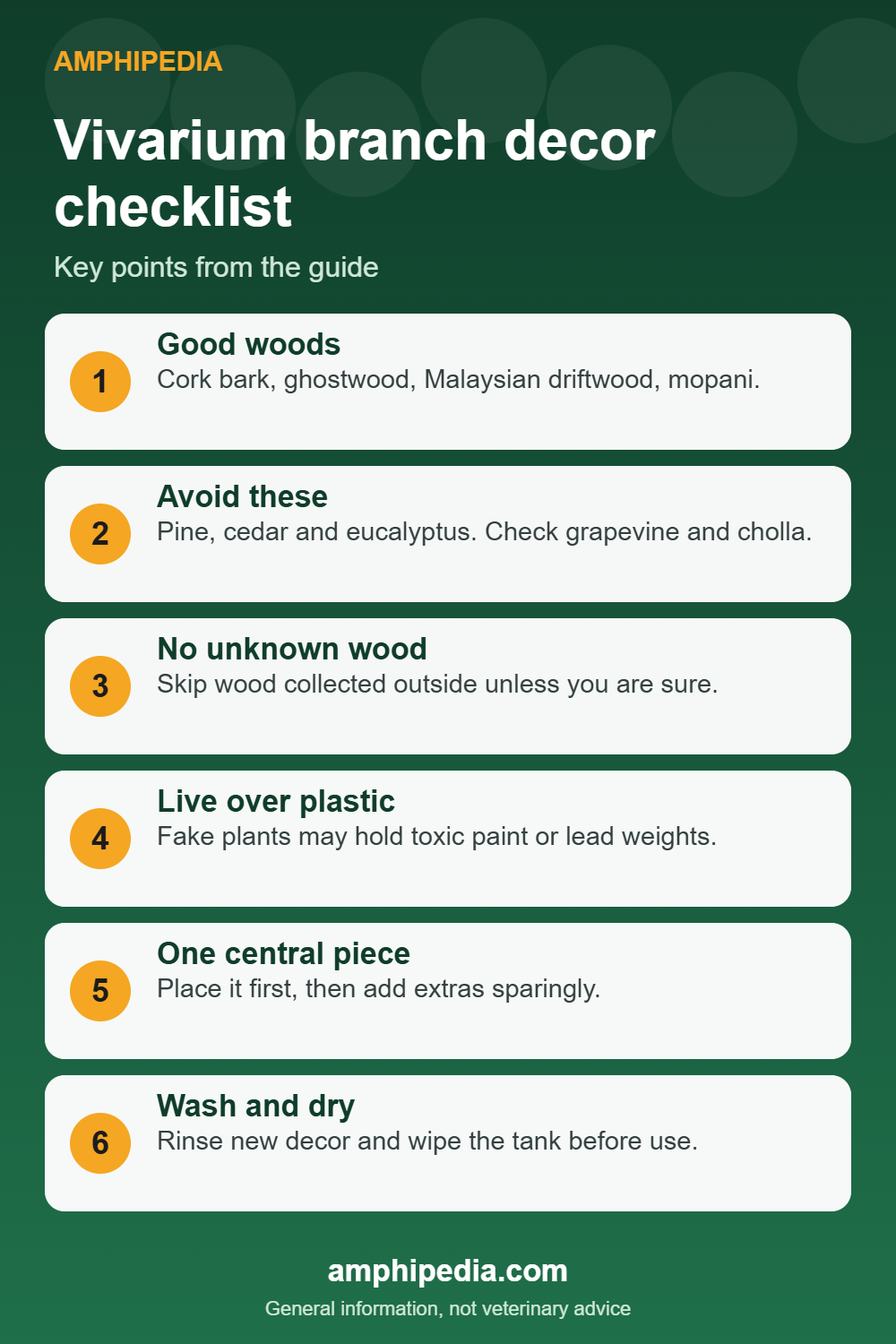
- Choose cork bark, ghostwood, Malaysian driftwood or mopani, which are named as good choices.
- Avoid pine, cedar and eucalyptus, and be careful with grapevine and cholla.
- Do not use wood collected outside unless you are sure what it is.
- Live plants are preferred to plastic vines, which may contain toxic paint or lead weights.
- Place one central piece first, then add extras without crowding the tank.
Pin this infographicShare on Facebook
Branches and bark to compare
These are general reptile and aquarium decor items, not amphibian-tested. Check the material and rinse before use.


Product titles, prices and ratings are provided by Amazon and are accurate only at the time they are displayed.
What a branch decor kit usually contains
Kits vary. Most bundle several pieces of wood or bark with vines, a hide and sometimes a background. The mix is chosen for looks and price, not for a particular species.
Read the full contents list and ask the seller what each item is made from. If the answer is vague, treat that piece as unknown and leave it out.
Safe woods and bark
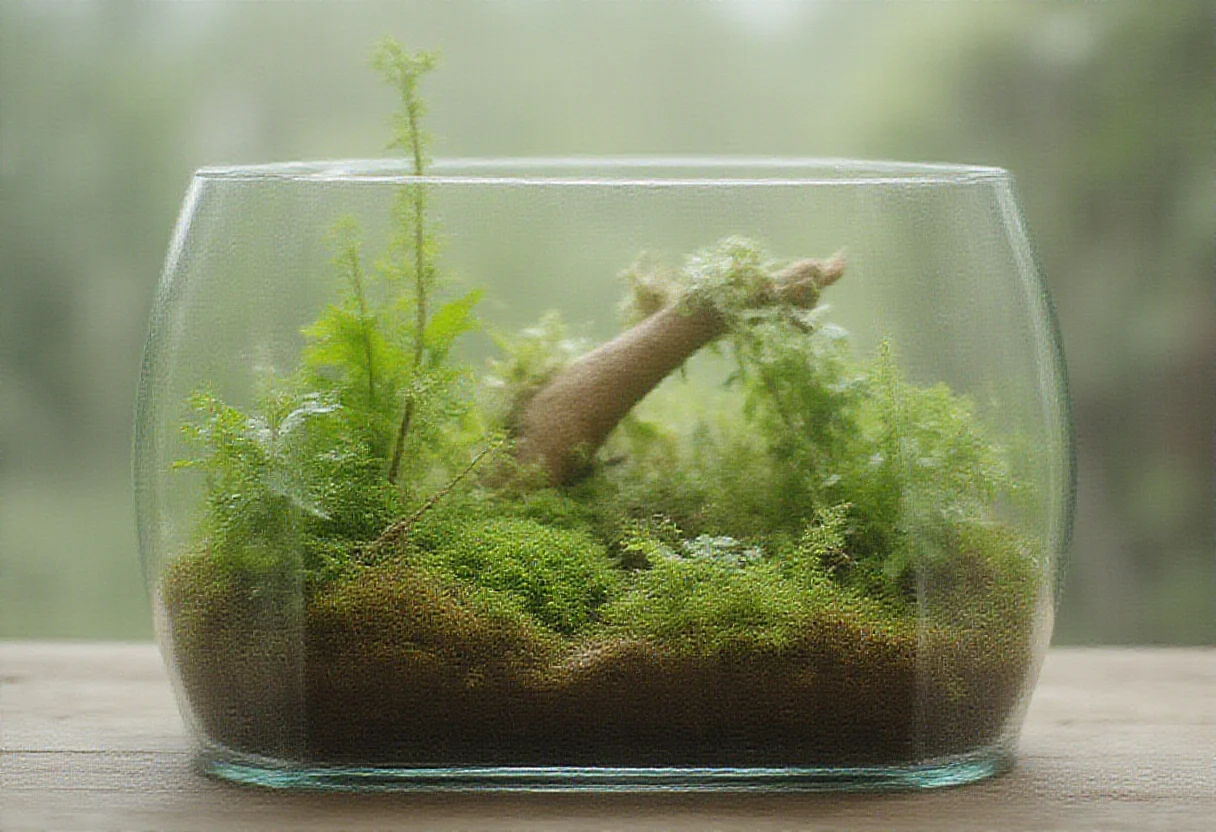
Dartfrog.pet advises moisture-tolerant hardwoods that resist rot, and names cork bark, ghostwood, Malaysian driftwood and mopani as the best choices. Reptiles Magazine says the woods to use in poison frog terraria are heavy driftwoods like those common in planted aquaria, and that cork tubes also work.
Cork bark is affordable, renewable and supports epiphytes, according to Reptiles Magazine. Standing a piece upright adds height, which frogs use for climbing.
Woods and materials to avoid
Dartfrog.pet calls pine, cedar and eucalyptus toxic to reptiles and amphibians. The MSD Veterinary Manual also says to avoid cedar and pine mulch because they contain toxic oils.
Reptiles Magazine says to steer clear of grape wood, grapevine and cholla wood. Many kits sell grapevine, so check before you buy.
- Pine, cedar and eucalyptus.
- Grapevine and cholla, if you follow Reptiles Magazine.
- Wood collected outside unless you are positive of its type.
- Plastic plants with painted leaves or metal weights.
- Sharp or splintered pieces that can scrape soft skin.
Plastic vines or live plants?
Dartfrog.pet advises live plants and warns that fake plants can contain toxic paint and lead weights. Live plants also help with air exchange and waste uptake.
If a kit includes plastic vines, you can leave them out and add living plants instead. Reptiles Magazine suggests dwarf varieties because a small plant in a small pot may grow much larger than expected.
Fixing bark and plants in place
Reptiles Magazine suggests aquarium-safe silicone for attaching backgrounds, and says to let it dry for at least four days. With raw cork flats, fill the gap behind the curved bark so frogs cannot climb behind the background.
For plants, the same article suggests dwarf bromeliads, dwarf trailing Peperomia, Hoya and Scindapsus pictus instead of pothos. Creeping fig needs regular pruning. Attach epiphytes with floral wire and a clump of wet sphagnum moss.
Layout: one central piece first
Reptiles Magazine suggests placing a central driftwood or cork structure at the right angle first, then adding other items afterward. In small or medium tanks it looks most natural to use one type of wood.
Keep the display from looking too busy. Leave open floor space and clear paths, and make sure every piece is stable so it cannot shift when the animal climbs.
Cover, hides and leaf litter
Frogs feel safer with cover. Dartfrog.pet says an enclosed background makes the frog feel more sheltered, and that a coco hut works as a shelter and a breeding spot.
Both sources recommend leaf litter. Reptiles Magazine says to use air-dried live oak or magnolia leaves from a pesticide-free area. Our leaf litter guide explains this in more detail.
Preparing new decor
Wash everything before it goes in. Reptiles Magazine says to wash plants thoroughly and to wipe the empty enclosure with a moist paper towel before adding items.
The MSD manual describes disinfecting equipment with 1 ounce of bleach per quart of water for at least 30 minutes, followed by a rinse and a dry. Rinse any treated item thoroughly and let it dry fully before use.
Enclosure size and fit
Sources give different starting points. Dartfrog.pet says to start with a 10 gallon tank and allow 5 gallons per frog. Reptiles Magazine recommends a 20 gallon high tank or slightly larger for beginners, holding 2 to 6 adult frogs depending on species and layout.
Branches take up room. Do not crowd a small tank, and check your own species in a sourced care sheet.
Simple setup steps
Build the layout dry before you add the animal.
- Check each kit item against the safe list above.
- Wash and dry the pieces, and wipe the empty tank.
- Place the central branch or cork piece and test that it is stable.
- Add hides, a background and live plants.
- Cover the floor with leaf litter and substrate suited to your species.
- Add the animal only after humidity and temperature have settled.
Common mistakes
These errors are easy to avoid.
- Buying a kit on looks without a list of materials.
- Using several wood types in a small tank.
- Leaving plastic vines in because they came in the box.
- Blocking the glass with so many branches that you cannot see the animal.
- Collecting wood from a garden or woodland.
- Skipping rinsing and drying after cleaning.
Related guides
See our guides to natural branches for climbing frogs, climbing vines and bamboo decor for tree frogs. Backgrounds are covered in our dart frog background guide.
Cork bark flats and tubes: two ways to use them
Reptiles Magazine describes two common cork forms. Pressed cork-bark tiles are the easiest to use because they are flat. Raw cork-bark flats also work, but you must fill the gap behind the curved bark with coco fiber, orchid bark or dried moss so frogs cannot climb behind it.
A cork tube can be split down one side, filled with orchid bark or sphagnum moss and planted so it looks like an overgrown fallen log. That gives you a hide, a climbing surface and a planting pocket from one piece.
Mounting plants on branches
A bare branch looks better with living plants attached. Reptiles Magazine gives these methods for mounting plants and epiphytes.
- Small epiphytes: bend floral wire into U-shapes and press it around the plant and a small clump of wet sphagnum moss so the roots can attach.
- Bromeliads on wood: tie them on with fishing line or floral wire, and pack moistened sphagnum moss around the base.
- Trailing plants: plant them in the substrate near the background, then anchor sections to it with floral wire.
DartFrog.pet adds that bromeliads hold small water cups that many frogs use to raise tadpoles. Whether that suits your species depends on the animal, so check a care sheet for your frog.
Build height and climbing routes
DartFrog.pet says standing wood vertically increases usable height, and that many frogs enjoy climbing. It also suggests background layers, steps or shelves so that frogs can climb and plants can sit on the background itself.
Before you add the animal, push on each branch and cork piece with moderate force. A piece that rocks, slides or leans on glass can fall when a frog jumps onto it. Wedge it against the background or against another heavy piece, and look for sharp points at every cut end.
White mould and rot on new wood
Reptiles Magazine says white, cottony mould often appears in the first few weeks and is considered normal. If it persists for more than a month, remove the rotting object. That is a useful rule of thumb for any kit, because you rarely know how old or how dry a piece was when it was packed.
DartFrog.pet links bacterial and fungal problems to standing water and soggy soil. It recommends a separator layer and regular drainage checks. Keep branch bases out of puddles, and make sure the floor under a piece of wood can drain.
Sealing background edges
Gaps along a decor piece can trap a frog. DartFrog.pet says to seal the edges of a background with silicone so frogs cannot get stuck in gaps, and notes that decorating the sides makes the enclosure feel more secure. Use aquarium-safe silicone, as Reptiles Magazine advises, and wait for the smell to fade before adding animals.
Preparing leaf litter that goes with the branches
The two main sources give different preparation methods for leaf litter. Reptiles Magazine says to air-dry live oak or magnolia leaves thoroughly to avoid pests or pathogens, and to collect them from a pesticide-free area. DartFrog.pet says to wash the leaves and bake them at about 220 F for an hour, watching for burning.
DartFrog.pet adds that some keepers boil leaves for 30 minutes instead, though this leaches tannins, and that baking can smell strong. Neither source says one method is better, so choose one and use it consistently.
Frequently Asked Questions
Which wood is safe for a frog vivarium?
Dartfrog.pet names cork bark, ghostwood, Malaysian driftwood and mopani as good choices.
Is pine safe?
No. Dartfrog.pet calls pine, cedar and eucalyptus toxic, and MSD says cedar and pine contain toxic oils.
Can I use branches from my garden?
Reptiles Magazine says to avoid wood collected outside unless you are positive of its type.
Are plastic vines safe?
Dartfrog.pet warns that fake plants can contain toxic paint and lead weights, so live plants are preferred.
Should I use one type of wood?
In small to moderate tanks, Reptiles Magazine says one wood type looks most natural.
How much decor is too much?
Reptiles Magazine warns against a terrarium that looks too busy. Leave open space.
Bottom Line
A good decor kit is one where you can name every material. Choose safe woods, add live plants and cover, and build the layout around one stable central piece.
If your amphibian looks unwell, see an exotics vet. The ARAV directory lists vets who treat amphibians.
Sources
- DartFrog.pet: Dart Frog Vivarium Setup, accessed 12 November 2026, for safe woods, live plants, hides, size and leaf prep
- Reptiles Magazine: How to Build a Poison Frog Terrarium, accessed 12 November 2026, for wood choices, layout, cork, mounting, mould and leaf litter
- MSD Veterinary Manual: Housing for Amphibians, accessed 12 November 2026, for temperature, humidity, gauges, ventilation and cleaning
- CDC: Reptiles and Amphibians, accessed 12 November 2026, for Salmonella and hygiene



6 Comments