Insect Breeding Cups for Feeding Amphibians: What to Know
This post contains affiliate links. As an Amazon Associate I earn from qualifying purchases. Prices and availability are shown by Amazon and can change.
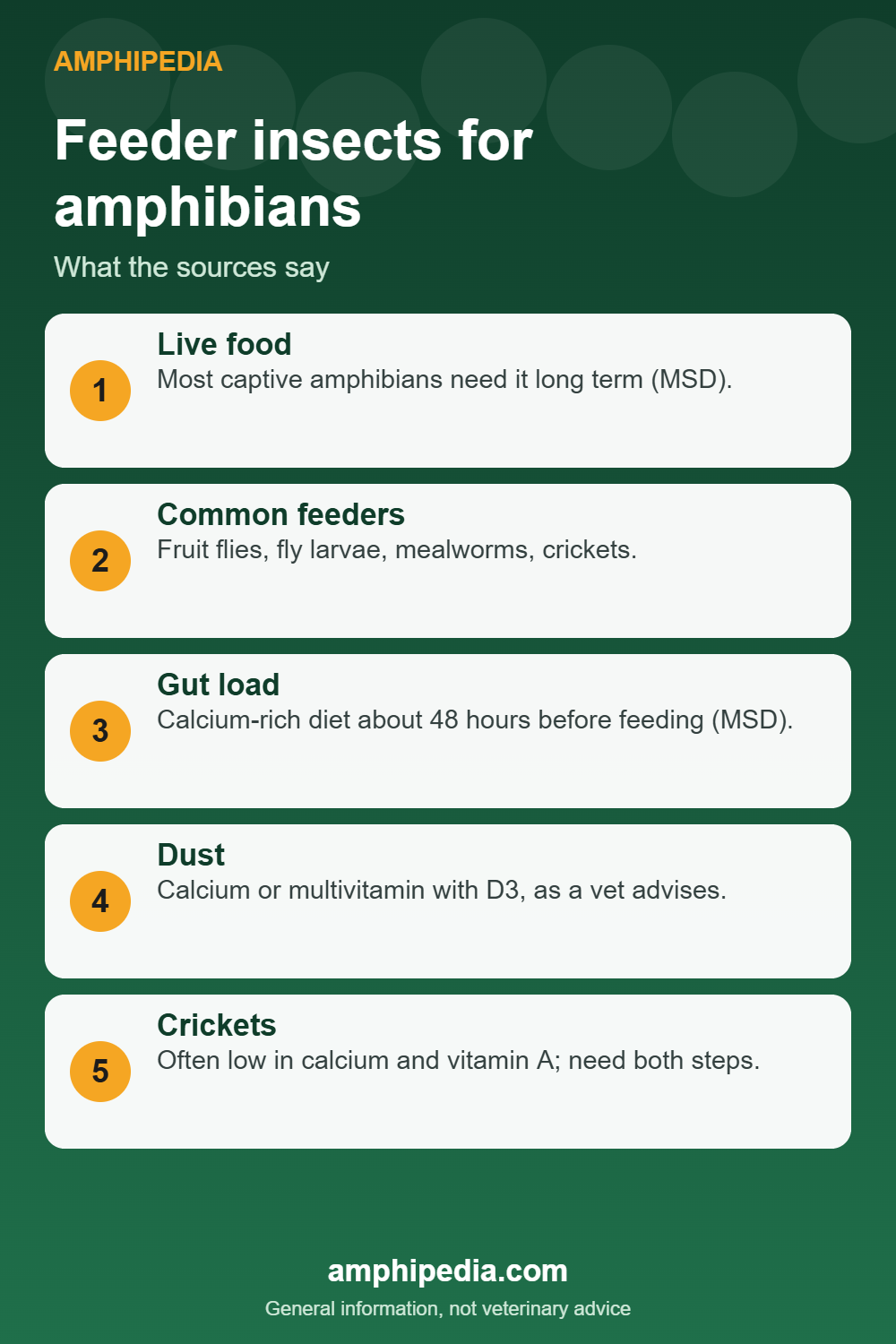
A good insect breeding cup keeps feeder insects alive, contained and easy to reach. Choose a clear, ventilated, escape-proof cup that is easy to wash. Remember that the cup is only half the job. Most captive amphibians need live food, and insects lack the right calcium balance on their own. The MSD Veterinary Manual describes gut loading with a calcium-rich diet 48 hours before feeding, plus dusting with a supplement.
Most pet frogs, toads and newts eat live insects. That means you need a clean place to hold and, for some feeders, breed them. A cup is the simplest option: small, stackable and cheap to replace.
This guide covers what a cup should do, how it fits into gut loading and dusting, and what to check before you buy. It does not rate individual products.
How this was made: prepared with AI assistance and checked against the sources listed at the end. Images are AI-generated illustrations, not photographs of real animals or products.
Key Takeaways
- Long-term care of most captive amphibians needs live food (MSD Veterinary Manual).
- Common feeders include fruit flies, fly larvae, mealworms and crickets.
- Insects alone lack the right calcium balance; gut load and dust them.
- Gut loading means feeding a calcium-rich diet about 48 hours before feeding (MSD).
- Pick a ventilated, escape-proof cup with a clear side and a simple, washable lid.
- Match the cup to the feeder: tiny flies need finer mesh than mealworms.
Pin this infographicShare on Facebook
Vented culture cups to compare
These listings are empty culture cups with vented lids, sold for fruit fly and feeder insect cultures. Check the size, the lid fit and the mesh, and confirm the cup suits the insect you keep.


Product titles, prices and ratings are provided by Amazon and are accurate only at the time they are displayed.
What a breeding cup is for
A breeding cup is a small container that holds a culture of feeder insects. It keeps them contained, supplied with food and ready for use. People use similar cups for fruit flies, mealworms and other small feeders.
The cup does not make insects healthier. What the insects eat and what you dust on them does. A cup is only a tidy, safe home for the culture.
Why the insects themselves matter
The MSD Veterinary Manual says that long-term care of most captive amphibians needs live food. Adults usually eat invertebrates such as fruit flies, fly larvae, mealworms and crickets.
It also warns that insects are not a complete diet. Most invertebrates lack the right calcium to phosphorus ratio and often lack key vitamins. Nutrition is the reason gut loading and dusting exist.
Gut loading and dusting
Gut loading means feeding the insects a calcium-rich commercial diet before you feed them to the amphibian. The MSD pet owner pages describe doing this 48 hours before feeding. Dusting means coating the insects with a powdered calcium or a powdered multivitamin that contains vitamin D3 and calcium.
A review in Zoo Biology (Livingston and colleagues, 2014) looked at cricket studies. It found that crickets are often low in calcium and vitamin A, and that gut loading and dusting both help but often do not reach the desired nutrient levels. The authors concluded that crickets seem to need both methods.
For dart frogs, Lafeber Veterinary advises dusting juvenile food twice a week and adult food once a week with a vitamin and mineral supplement. Amphibians cannot make carotenoids, so MSD notes they need a vitamin A source. Ask an exotics vet which supplement and schedule suit your species.
Features to look for in a cup
Check the listing for each of these points.
- Ventilation: air holes or mesh so the culture does not sweat and spoil.
- Mesh size: it must stop the smallest stage you keep. Tiny flies need finer mesh than larger insects.
- Lid fit: the lid should snap on firmly and be easy to open without a flood of escapees.
- Clear walls: you can see food, moisture and activity without opening the cup.
- Size: small cups fit a small culture; a larger cup suits a bigger group. Do not overfill.
- Material: choose smooth plastic that you can rinse and let dry fully.
- Stackable shape: helps if you keep several cultures on a shelf.
- Easy cleaning: avoid ridges and corners that trap residue.
Setting up and using a cup
Follow the supplier instructions for the specific feeder. These general habits apply to most cups.
- Wash the cup and lid, rinse well and dry completely before use.
- Add the culture medium and starter insects as the supplier directs.
- Label the date on the outside of the cup so you can rotate cultures.
- Keep cups on a stable shelf, out of direct sun and away from heaters.
- Gut load the insects you plan to feed, then dust them just before the meal.
- Throw out any culture that smells foul, grows mould or stops producing.
Questions to ask before choosing a size
Think about how many amphibians you feed and how often. A single small frog needs fewer insects than a group of adults. A cup that is too small runs out. A cup that is too big stays damp and slow to turn over.
- How many animals will eat from this culture each week?
- Which feeder will you hold: flies, mealworms or something else?
- Do you have room to run two cups so one is always ready?
- Can you reach the cup easily, or will it sit behind other gear?
Cleaning and storing cups
Cups hold food, moisture and insect waste. Plan a simple routine so a problem in one cup does not spread to the next.
Empty finished cultures into the bin, not the sink. Wash the cup and lid with hot water, rinse thoroughly so no cleaner residue is left, and let both dry before the next use.
Keep a clean set of tools just for feeder cups. Wash your hands after handling cultures, feeder cups, the tank or the frog.
Matching feeders to your amphibian
Size matters. Lafeber lists fruit flies, termites, aphids and pinhead crickets for dart frogs. Larger frogs, toads and newts take larger insects. Offer prey that is small enough to swallow whole.
The sources used for this guide describe cultured feeders such as fruit flies, fly larvae, mealworms and crickets. They give no advice on wild-caught insects, so this guide does not cover them.
Common mistakes
These problems come up often with feeder cups.
- Overfilling the cup and letting it get wet and crowded.
- Using lids with large gaps or poor seals.
- Skipping gut loading or dusting.
- Sharing tools between cultures and frog tanks without washing.
- Keeping old cultures going long after they decline.
Variety matters more than a bigger culture
The MSD Veterinary Manual lists a wide menu for adult amphibians, including earthworms, bloodworms, black worms, white worms, tubifex worms, springtails, fruit flies, fly larvae, mealworms and crickets. Some species also take small vertebrates. A cup can only hold one or two of these.
The manual notes that most invertebrates lack the right calcium to phosphorus ratio, with earthworms the exception. The Zoo Biology review of cricket studies, cited above, found that gut loading and dusting often fall short of target nutrient levels. So a second feeder type can beat a larger cricket culture.
Nutrition problems a feeding plan should prevent
MSD says metabolic bone disease is common in amphibians fed only invertebrates without supplements, and that cricket-only diets are especially risky. Signs include a soft or deformed lower jaw, fractures and a curved spine. Treatment is for a vet to plan.
Vitamin A deficiency can cause mouth changes and short tongue syndrome, swollen eyelids and reproductive problems, according to MSD. These conditions need a vet. Do not guess at doses, and do not apply skin products without advice.
Do not let the culture drive the portion
A full cup tempts you to feed more. MSD calls overfeeding the main cause of obesity in amphibians, and says management includes smaller portions and, for active species, a larger enclosure.
Feed to your animal, not to the culture. Count what each feeding uses, and cull or share extra insects rather than offering them. If your frog or newt looks round or stops chasing prey, ask an exotics vet about portions.
Handling a failing culture
Cultures decline over time. Start a second cup before the first one slows, so you never run short. Move starter insects to a fresh clean cup, label the date, and discard the old cup without feeding from it.
Do not feed insects from a culture that smells foul or has mould. Wash the old cup and lid before reuse, and wash your hands afterwards.
Frequently Asked Questions
Do amphibians need live insects?
The MSD Veterinary Manual says long-term care of most captive amphibians requires live food.
What is gut loading?
Feeding insects a calcium-rich commercial diet before they are eaten. MSD describes doing this 48 hours before feeding.
What is dusting?
Coating insects with a powdered calcium or a powdered multivitamin with vitamin D3 and calcium, as MSD describes.
Which insects do dart frogs eat?
Lafeber Veterinary lists fruit flies, termites, aphids and pinhead crickets.
Are crickets enough on their own?
No. A Zoo Biology review found crickets are often low in calcium and vitamin A and seem to need both gut loading and dusting.
How many cups do I need?
It depends on the species and how many mouths you feed. Many keepers run more than one culture so one is always ready.
Bottom Line
A breeding cup is a tidy home for feeder insects. The real benefit comes from what the insects eat and the supplements you give.
For more feeding help, read fruit fly culture kits, gut load food and calcium supplements.
Sources
- MSD Veterinary Manual: Diet for Amphibians (pet owner version), accessed Live food, gut loading, dusting
- MSD Veterinary Manual: Environment and Husbandry for Amphibians, accessed Live food, vitamin A, supplements
- Lafeber Veterinary: Basic Information Sheet, Poison Dart Frog, accessed Feeder insects and dusting schedule
- Livingston et al. 2014, Zoo Biology: Challenges with effective nutrient supplementation for amphibians, a review of cricket studies, accessed Abstract of the cricket supplementation review
- CDC: Reptiles and Amphibians, accessed Salmonella and hygiene
- MSD Veterinary Manual: Nutritional Diseases of Amphibians


4 Comments