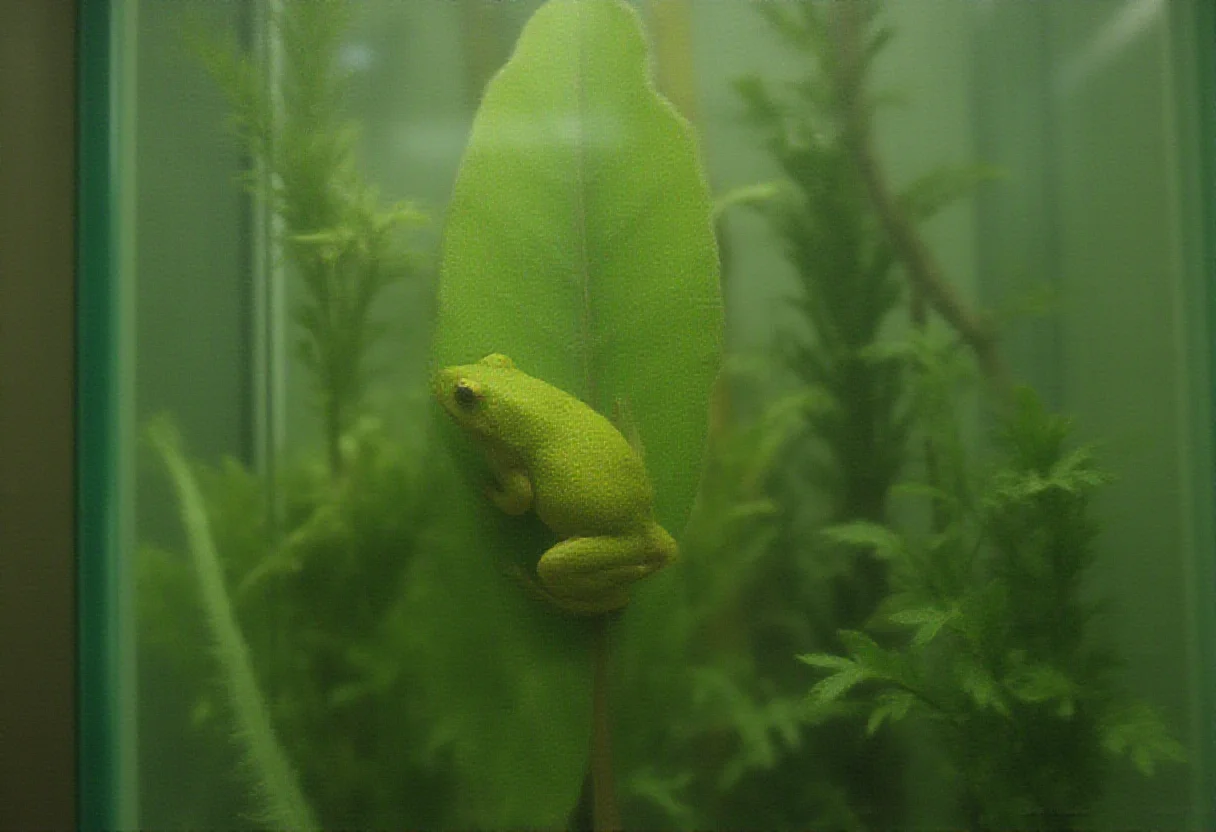
Best Vertical Terrarium for Tree Frogs: Size, Vents and Features
This post contains affiliate links. As an Amazon Associate I earn from qualifying purchases. Prices and availability are shown by Amazon and can change.
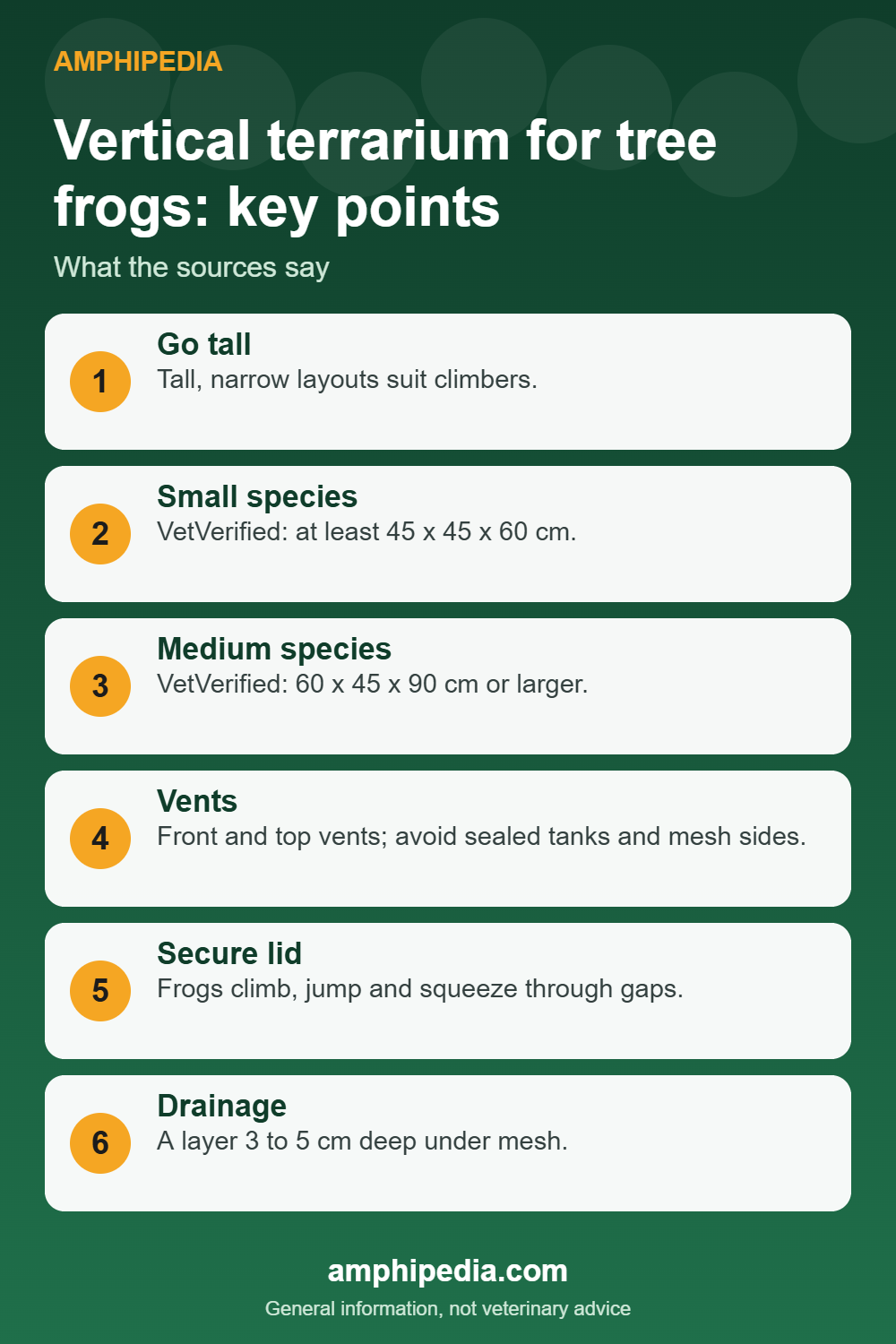
A good vertical terrarium for tree frogs is a tall glass enclosure with front and top ventilation, a tight-fitting lid, room to climb and a drainage-friendly base. VetVerified gives 45 by 45 by 60 cm as a minimum for small arboreal frogs, and 60 by 45 by 90 cm or larger for medium species. It advises against fully sealed enclosures and mesh sides, which lose humidity. Check your own species first.
Tree frogs use height, not floor space. A tall tank gives them branches to climb, leaves to sit on and a gradient of temperature and humidity from bottom to top.
This guide explains what size to look for, how ventilation and lids work, and which features are worth paying for.
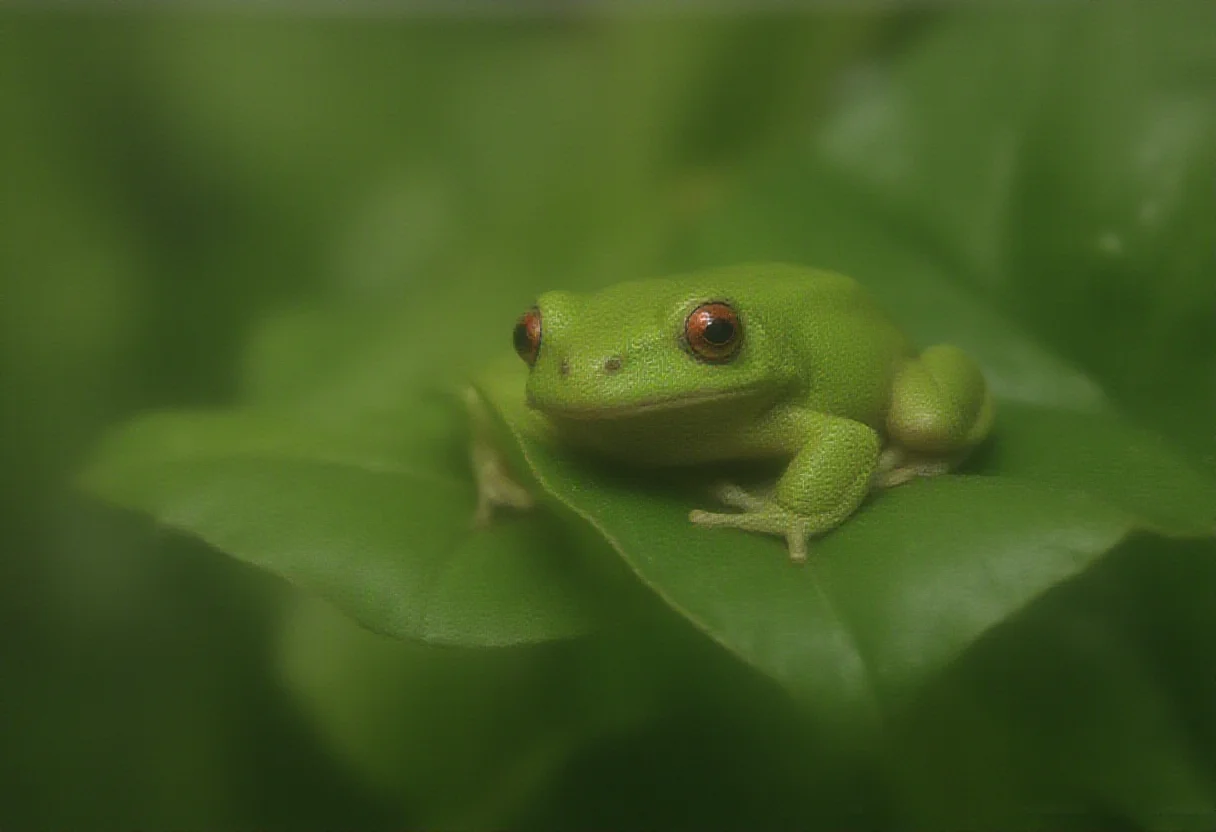
How this was made: prepared with AI assistance and checked against the sources listed at the end. Images are AI-generated illustrations, not photographs of real animals or products.
Key Takeaways
- VetVerified gives 45 x 45 x 60 cm as a minimum for small arboreal frogs and 60 x 45 x 90 cm or larger for medium species.
- Tall, narrow layouts suit climbers better than long, low tanks.
- Front and top vents are best. Avoid fully sealed tanks and mesh sides.
- Use a tight lid. The NSW Department of Education says frogs climb, jump and squeeze through small gaps.
- Add a drainage layer 3 to 5 cm deep under mesh or weed membrane, as VetVerified suggests.
Pin this infographicShare on Facebook
Tall glass terrariums to compare
These listings are glass terraria at or above the size VetVerified gives for small arboreal frogs (45 x 45 x 60 cm is 18 x 18 x 24 inches). They are sold for reptiles, which does not mean amphibian-tested, so check ventilation, the lid and your species.

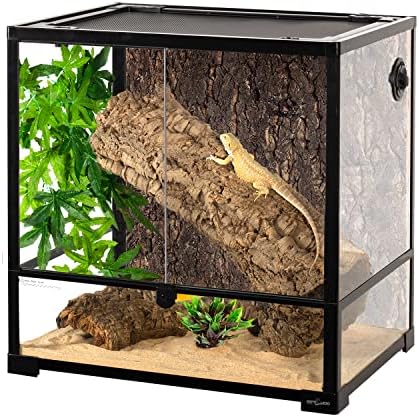


Product titles, prices and ratings are provided by Amazon and are accurate only at the time they are displayed.
Why height matters for tree frogs
Tree frogs are arboreal, which means they live in trees and shrubs. In a tank they spend most of their time off the ground, climbing between branches and leaves.
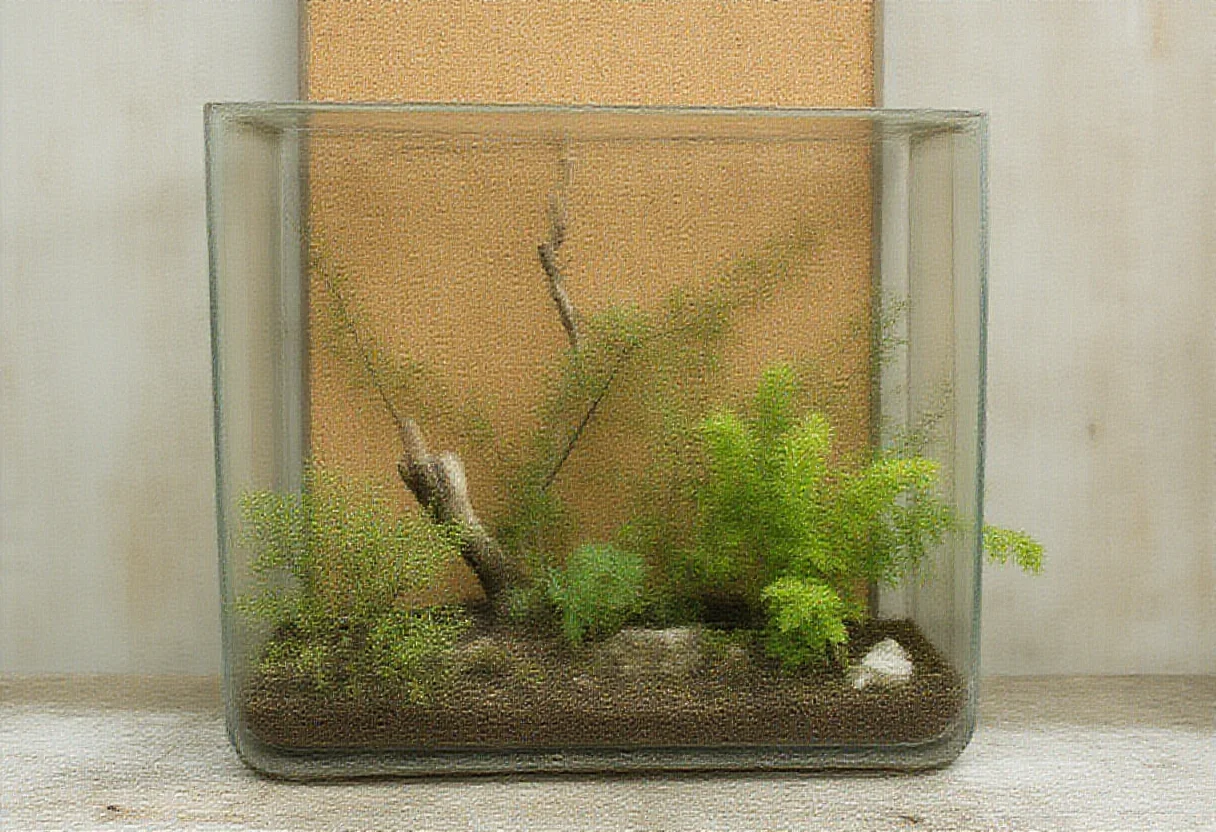
VetVerified says tall, narrow layouts suit climbers and that long, low tanks are unsuitable. A vertical enclosure also creates a gradient: warmer, drier air near the top, damper air near the bottom.
Minimum sizes from the sources
Sizes depend on the species and the number of frogs. Treat these figures as starting points, and check a care sheet for your own animal.
| Animal size | Minimum enclosure | Source |
|---|---|---|
| Small arboreal frogs | 45 x 45 x 60 cm | VetVerified |
| Medium species | 60 x 45 x 90 cm or larger | VetVerified |
| General rule | Bigger is better if conditions stay stable | VetVerified |
Ventilation and lids
VetVerified says front and top vents are best, and fully sealed enclosures should be avoided. It also says mesh sides are unsuitable for amphibians because they lose humidity.
The MSD Veterinary Manual recommends about 1 to 2 fresh air changes per hour. The NSW Department of Education advises a metal-framed lid with mesh attached, because frogs can climb, jump and squeeze through small gaps. Check every hole, including cable and tube openings.
Features worth having
Look beyond the size. These details make daily care easier.
- A front-opening door, so you can reach in without lifting the lid and disturbing the frog.
- A glass front and sides that hold humidity.
- A screen top or vent panel for airflow.
- A lockable lid or latch.
- A waterproof base with room for a drainage layer.
- Pre-drilled holes for tubing or cables, with a way to seal gaps.
- A removable background or a surface for attaching one.
- A frame that fits under your lights.
Climbing space and decor
VetVerified advises placing branches both vertically and diagonally, with several routes between levels. It also suggests vertical surfaces such as cork bark or foam backgrounds to add climbing area.
Shake every climbing piece gently before adding frogs to check it is secure. See our guides to hanging vines, bamboo hides, wall backgrounds and live plants.
Substrate, drainage and humidity
VetVerified suggests a drainage layer 3 to 5 cm deep, separated from the substrate by mesh or weed membrane. It lists coconut fibre, fertiliser-free topsoil, orchid bark mixes and leaf litter as suitable, and advises against sand, gravel and dry reptile substrates.
It gives 60 to 80 percent humidity for arboreal species, and says to mist regularly but let surfaces dry slightly between sessions. Our drainage mat guide explains the base in more detail.
Light and temperature
VetVerified suggests a 12 hour day and night cycle and low-level UVB placed above mesh rather than glass. The NSW Department of Education gives 20 to 25 C as the ideal range for green tree frogs, with heat sources outside the enclosure and a gradient so frogs can reach cooler areas.
The right numbers depend on your species. Our care guides for green tree frogs and dumpy tree frogs cover two common choices.
Glass or acrylic?
VetVerified calls glass the most common material and notes that PVC retains heat and humidity. Acrylic is another option, and our acrylic enclosure guide covers its trade-offs for dart frogs, which also apply to tall tree frog set-ups.
Plan for cleaning
A tall tank is harder to clean than a low one, so check how easily you can reach every corner. VetVerified suggests daily checks of temperature and humidity, removing visible waste and refilling water bowls.
It adds weekly spot-cleaning and mould checks, and a monthly deep clean for set-ups that are not bioactive. A front door makes this far easier. See our frog tank cleaning guide for safe steps.
Common mistakes
These mistakes are easy to avoid when you shop.
- Buying a long, low tank for a climbing species.
- Choosing mesh sides for a humid-loving frog.
- Using a loose lid.
- Skipping the drainage layer.
- Putting the tank where sun can overheat it.
- Buying the smallest size when the frog will grow.
Species examples: why height is not the whole story
“Tree frog” covers many species with different needs. A tall tank suits all of them, but the numbers inside it change. The care sheets below show how much.
- VetVerified (arboreal species in general): 60 to 80 percent humidity, 24 to 28 C by day and 20 to 22 C at night.
- RVC Exotics Service (White’s tree frog, reviewed December 2024): about 60 to 70 percent humidity, a basking spot near 30 C, a cool end near 25 C and nights not below about 21 C.
- LafeberVet (White’s tree frog): 60 to 70 percent humidity, a gradient of 24 to 32 C and a basking spot up to 35 C.
- NSW Department of Education (Australian green tree frog): air temperature of 20 to 25 C.
The sources disagree on some details, even for the same frog. For White’s tree frog, RVC gives a basking spot near 30 C, while LafeberVet allows up to 35 C. Merck gives 75 to 80 percent humidity for most amphibians, which is higher than the 60 to 70 percent in the White’s tree frog sheets.
Do not average these numbers. Pick the sheet that matches your species, and use a thermometer and hygrometer to check what your tank really does.
Heat and UVB in a tall tank
Height makes a natural gradient, but only if you place equipment with care. VetVerified suggests warm upper zones and cooler lower areas, run through thermostats with digital thermometers.
RVC adds that every heat source should be on a thermostat, monitored with a digital max/min thermometer and guarded against burns. It suggests low-output UVB for about 12 hours a day, placed at the distance the manufacturer recommends.
VetVerified gives low-level UVB at 2 to 5 percent, positioned above mesh rather than glass, with bulbs replaced every 6 to 12 months. That means a tall glass tank needs a mesh panel or vent section at the top for lighting.
- Check the top of the tank has a mesh section wide enough for your lamp.
- Keep bulbs outside the enclosure, as NSW Department of Education advises for heat lamps.
- Make sure climbing branches do not bring the frog within burn range of a lamp.
Water and misting in a tall enclosure
VetVerified suggests shallow, stable bowls placed near climbing routes and cleaned daily. It also says to mist by hand once or twice a day, or use an automated system, and notes that some species only drink from moving droplets.
RVC advises enough water for a White’s tree frog to submerge comfortably, while LafeberVet describes a sizable but shallow dish. For water sources, LafeberVet lists aged tap water left open for 24 to 48 hours, bottled spring water, or tap water filtered through sediment and activated charcoal.
Merck takes a stricter line on chloramine. It suggests a specific dechlorinating agent first, then carbon filtering, so check what your water supplier uses before you rely on aging alone.
VetVerified lists over-misting without airflow as a common mistake. In a tall tank, moisture and warm air collect near the top, so look at the vents before you add more mist.
Setting the tank up before the frog goes in
VetVerified says to make sure the enclosure is fully cycled and stable before you introduce an animal. It also advises minimal handling, close observation for the first few weeks and no overcrowding.
- Fit the drainage layer, mesh barrier and substrate.
- Place branches, vines and the background, and shake each piece to test it.
- Add pesticide-free plants. VetVerified says to wash the leaves first.
- Run the lights, heat and misting for several days.
- Check temperature and humidity at the top, middle and bottom.
- Check every vent, door and cable gap for escape routes.
- Add the frog, then watch it closely.
LafeberVet says a 20-gallon (75 L) terrarium suits one to four White’s tree frogs. That sheet does not give a height, so do not read it as a rule for a tall tank. Use it as a floor-space reference only.
Cleaning tasks that are specific to tall tanks
RVC advises daily spot-cleaning for droppings, dead insects and uneaten greens. It suggests cleaning the whole vivarium monthly with an amphibian-safe disinfectant. VetVerified suggests a monthly deep clean only for set-ups that are not bioactive.
Merck gives a disinfectant recipe of household bleach at 30 mL per litre of water, with at least 30 minutes of contact, then thorough rinsing and drying. Keep frogs in a secure holding container while you clean.
Frequently Asked Questions
How tall should a tree frog tank be?
VetVerified gives 60 cm for small arboreal frogs and 90 cm for medium species as minimums.
Can I use a mesh-sided tank?
VetVerified says mesh sides are unsuitable for amphibians because they lose humidity.
How many vents do I need?
Front and top vents are best, per VetVerified. Avoid fully sealed enclosures.
Do tree frogs need a secure lid?
Yes. The NSW Department of Education says frogs climb, jump and squeeze through small gaps.
What humidity do they need?
VetVerified gives 60 to 80 percent for arboreal species. Check your own species.
Is bigger better?
VetVerified says bigger is better as long as conditions stay stable.
Bottom Line
The right tank is tall, ventilated, secure and easy to clean. Check your species size first and buy a little larger than the minimum.
If your frog stops eating or shows skin changes, see an exotics vet. The ARAV directory can help you find one.
Sources
- VetVerified: How to set up a terrarium for arboreal species, accessed 12 November 2026 (published 28 May 2026). Used for: sizes, vents, drainage, humidity, lighting, cleaning schedule
- NSW Department of Education: Green tree frog environment, accessed 12 November 2026. Used for: secure lids, temperature, lighting
- MSD Veterinary Manual: Housing for Amphibians, accessed 12 November 2026. Used for: ventilation and humidity
- CDC: Reptiles and Amphibians, accessed 12 November 2026. Used for: Salmonella and hygiene
- RVC Exotics Service (Beaumont Sainsbury Animal Hospital): White’s Tree Frog Care, reviewed December 2024, accessed 12 November 2026. Used for: White’s tree frog humidity, heat, UVB, cleaning
- LafeberVet: Basic Information Sheet: White’s Tree Frog, accessed 12 November 2026. Used for: terrarium size, humidity, temperature gradient, water sources
- Merck Veterinary Manual: Environment and Husbandry for Amphibians (professional version), accessed 12 November 2026. Used for: chloramine treatment, disinfection