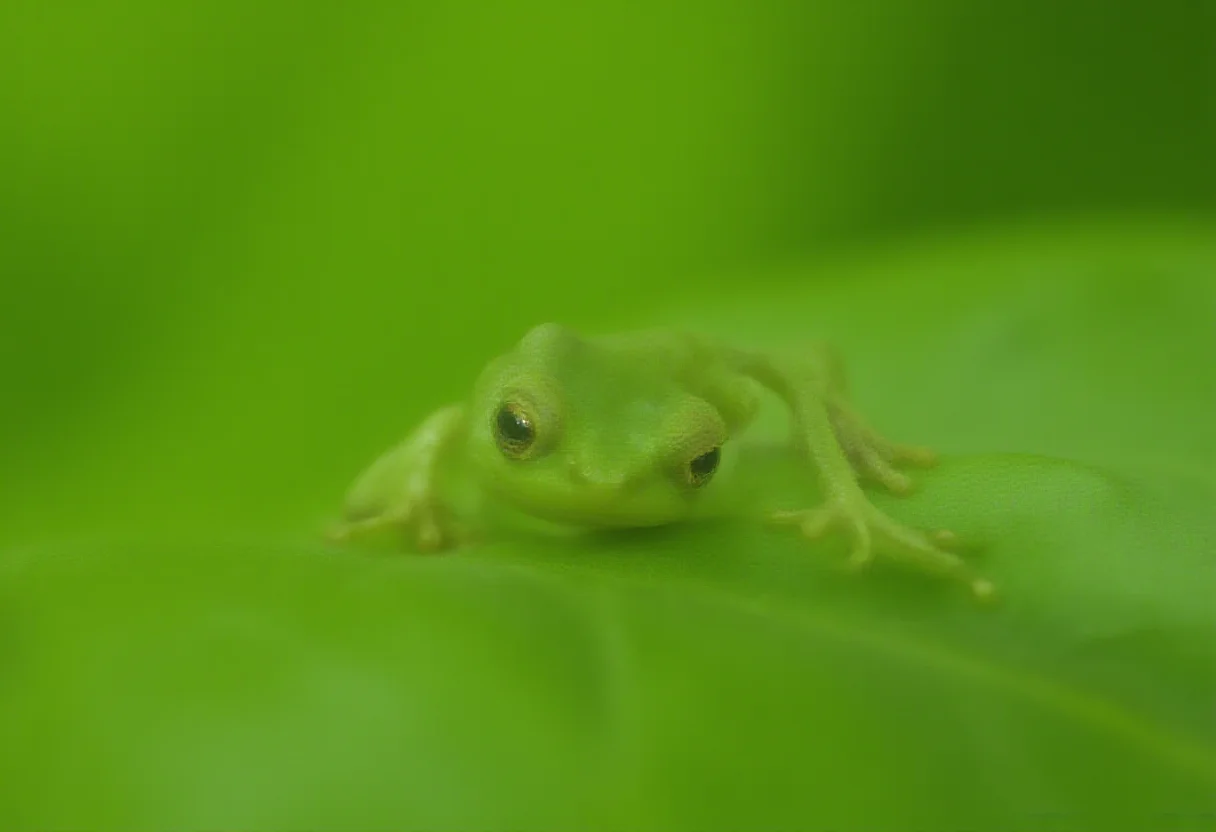
Substrate Heating Cable for Amphibians: Do You Need One?
This post contains affiliate links. As an Amazon Associate I earn from qualifying purchases. Prices and availability are shown by Amazon and can change.
Most amphibians do not need a substrate heating cable. Many prefer cooler temperatures than reptiles, and axolotls and many salamanders can be harmed by warmth. A cable only makes sense for a tropical frog kept in a room that stays too cold, and only if it runs through a thermostat, sits outside the animal’s reach, and leaves a cool side in the enclosure. Check your species first, then decide.
A heating cable is a thin, insulated wire that warms the layer it is buried in. Reptile keepers use it often. Amphibian keepers should be more careful, because amphibian skin is thin and permeable, and a warm, dry hot spot can injure an animal or dry out the substrate.
This guide explains who might need a cable, who should never use one, and what to look for in a safe setup. Check your species’ range with a vet or care sheet before buying anything.
How this was made: prepared with AI assistance and checked against the sources listed at the end. Images are AI-generated illustrations, not photographs of real animals or products.
Key Takeaways
- Check your species’ preferred temperature range before buying any heater.
- Axolotls, many salamanders and newts prefer cool conditions and need no heat source.
- If you use a cable, run it through a thermostat with a probe, never on its own.
- Keep the cable under a barrier so the animal cannot touch or dig down to it.
- Give every enclosure a warm side and a cool side so the animal can choose.
- Check the temperature daily and replace any damaged cable at once.
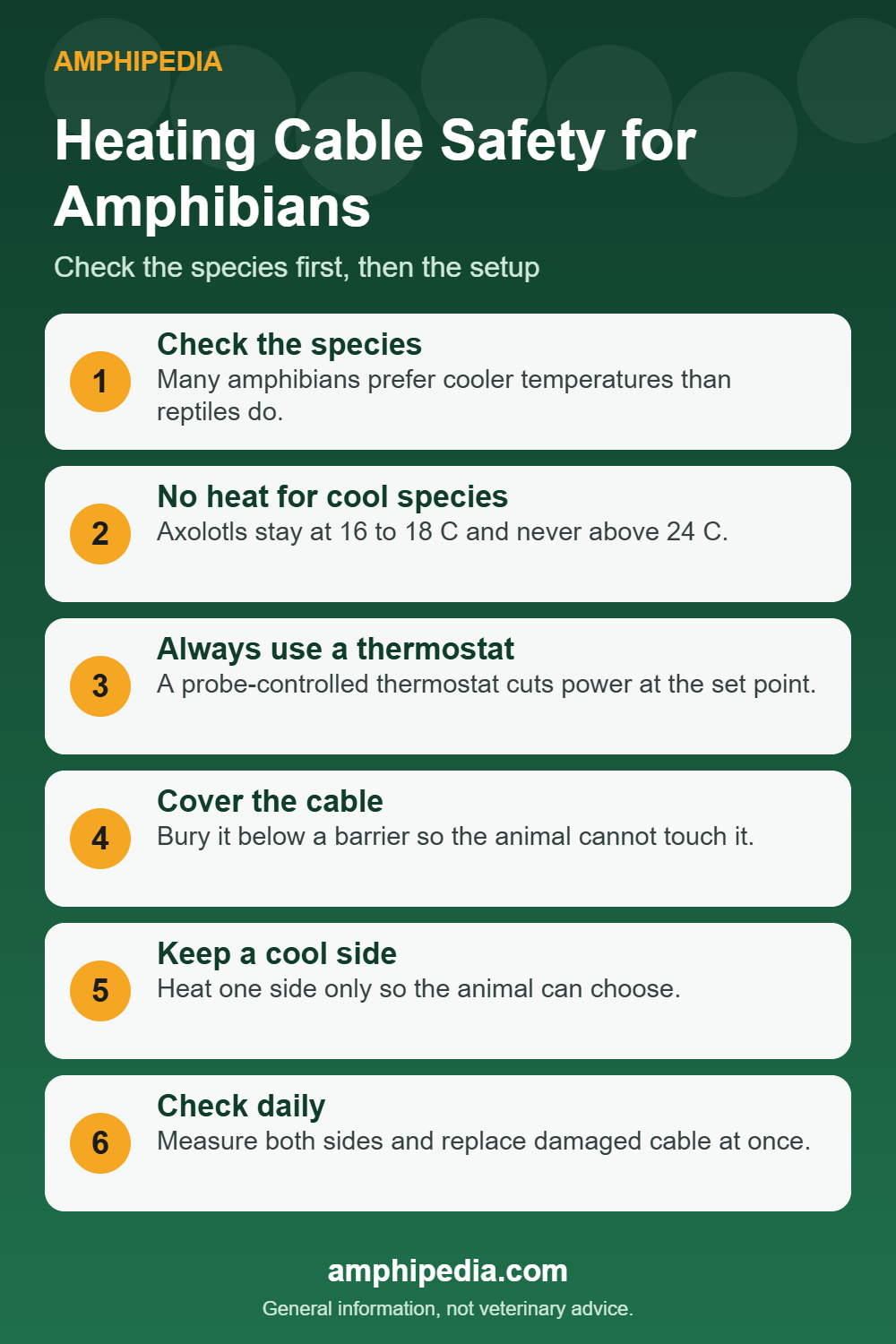
Pin this infographicShare on Facebook
Top Picks at a Glance
The table is ordered from the highest price to the lowest. Prices, images and buy buttons come straight from Amazon and are not edited by us.


Product titles, prices and ratings are provided by Amazon and are accurate only at the time they are displayed.
Do amphibians need extra heat?
Usually not. The MSD Veterinary Manual notes that amphibians have a preferred temperature zone that is generally lower than that of reptiles. Salamanders prefer substantially lower temperatures than frogs and toads.
The same source says a thermal gradient inside that zone lets most amphibians regulate their own body temperature. In many homes, normal room temperature already sits inside the range. Look at the room first, then at the species.
Water temperature matters just as much for aquatic animals. The Royal Veterinary College advises 16 to 18 C for axolotls and says the water should never exceed 24 C. A heater, cable or pad has no place in that tank.
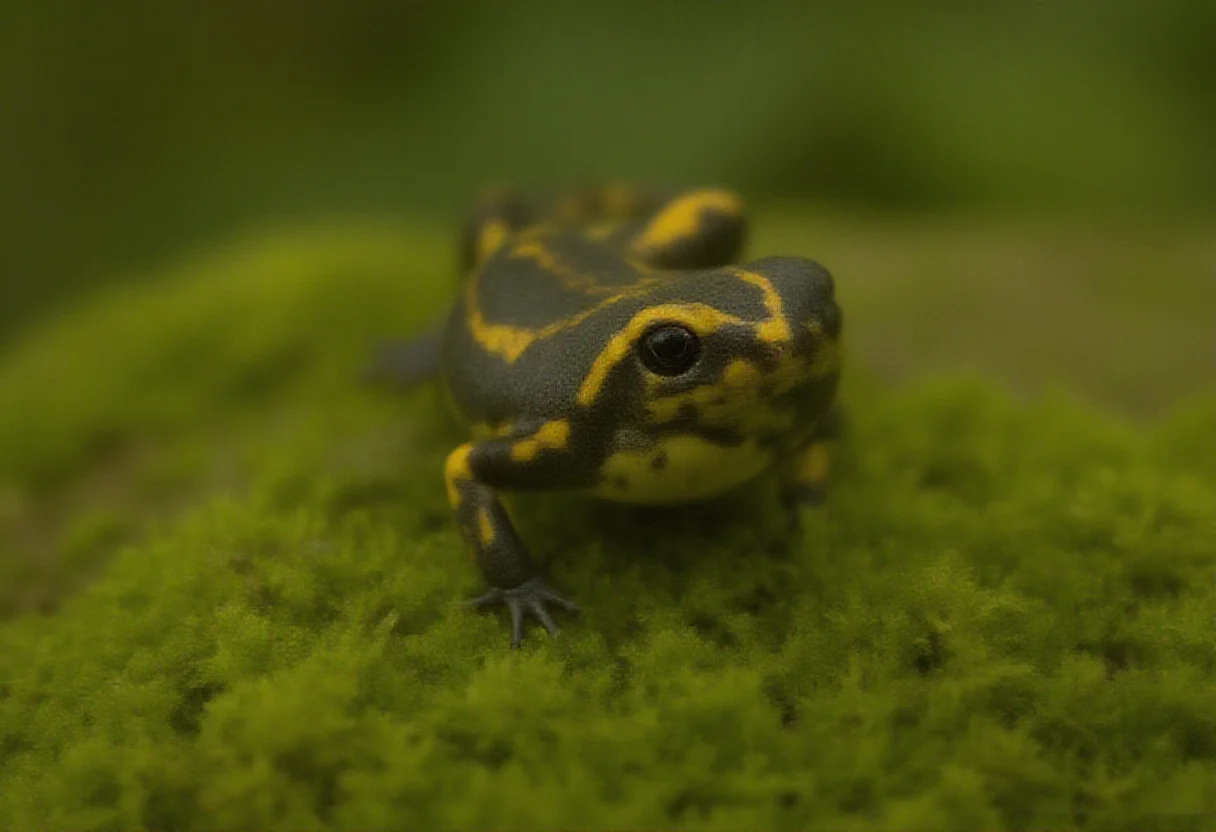
Which species might benefit
A heating cable can suit some tropical frogs kept in a cool room, such as many tree frogs and dart frogs. Even then, the goal is gentle warmth, not heat.
PetMD advises that a tree frog habitat should never get hotter than 80 F and that any under-tank pad must run through a thermostat. The same logic applies to a cable. Use the species’ own range, not a generic reptile figure.
- May suit: tropical frogs in a room that stays below their range.
- Usually not needed: fire-bellied newts, most terrestrial salamanders, axolotls.
- Never suitable: any setup you cannot control with a thermostat.
How a heating cable works in a terrarium
A cable is laid in loops under or inside the lower substrate layer. It warms the soil, and the soil slowly warms the air near the ground. That heat travels upward and dries the layers it passes through.
This is the main risk for amphibians. Drying soil lowers humidity right where a burrowing or ground-dwelling animal sits. Wet, warm patches can also encourage bacterial growth. Keep the heated area small.
- Plan the cable so it covers one side of the enclosure only.
- Bury it below a barrier or under the false bottom, away from digging.
- Connect it to a thermostat with a probe placed in the warm zone.
- Set the thermostat to the low end of the species’ range, not the high end.
- Measure the warm and cool sides daily and adjust.
What to look for before you buy
Reptile and amphibian labels are not the same. A cable sold for reptiles has not been tested for amphibians, so judge it on its safety features.
The checklist below covers what matters most for a damp enclosure.
- Fully insulated, waterproof or water-resistant cable jacket.
- A length and wattage that match the size of the enclosure. Lower wattage is safer.
- A matching or separate thermostat with a probe.
- A cord long enough to reach a drip loop and a safe outlet.
- No exposed wire, kinks or damaged insulation on arrival.
- Clear instructions from a recognized brand.
Thermostats matter more than the cable
A cable without a thermostat can keep heating until the soil is too warm. A thermostat reads a probe and cuts power at the set point. It is the key safety device in the whole setup.
Pair the cable with a unit that you can set precisely. For more on controllers, see our guide to a timer and thermostat combo for frogs, and check readings with an accurate thermometer.
Common mistakes
Most problems come from skipping the basics. These are the errors that cause injuries or dry enclosures.
- Running a cable with no thermostat.
- Burying it close to the surface where an animal can dig onto it.
- Heating the whole floor, so the animal has nowhere cool to go.
- Using it for a cool-water species.
- Ignoring humidity, which drops as the soil warms.
- Leaving a damaged cable plugged in.
Alternatives to a heating cable
If your room is too cool, first look for a simpler fix. Move the enclosure to a warmer room, away from drafts and windows. A low-wattage lamp over one side can raise ambient air gently.
A heat mat is a related option, but it carries similar risks. Read our guide to a heat mat for amphibians and compare. For newts and other aquatic species, see why most newts do not need a heater.
What veterinary care sheets say about heat sources
The Royal Veterinary College (RVC) care sheets give more detail than a simple yes or no. They show that heat, where used at all, is gentle, local and controlled.
- Terrestrial salamanders: RVC gives about 18 to 24 C by day and about 10 to 15 C at night. It allows only under-tank heaters, at one end of the tank, controlled by a thermostat. It also asks for humidity of at least 70 percent.
- White’s tree frog: RVC describes a basking spot of about 30 C, a cool end of about 25 C, and an overnight temperature not below about 21 C. It says heat sources need a thermostat and a digital max/min thermometer.
- Axolotl: RVC gives 16 to 18 C and a never-exceed limit of 24 C, so heating is not appropriate.
So the question is not cable versus no cable. It is whether your room misses the range, and whether the heat can stay on one side with a cool side beside it.
Tropical frog ranges compared
Sources disagree, so use their overlap rather than the highest number.
- Merck: 75 to 80 F (24 to 27 C) for tropical amphibians in general.
- WWF, White’s tree frog: 75 to 85 F (24 to 29 C) by day and 65 to 75 F (18 to 24 C) at night.
- PetMD, red-eyed tree frog: never hotter than 80 F (27 C).
If you plan to set a thermostat for a tree frog, the 80 F limit that PetMD gives sits inside the Merck range and below the WWF daytime ceiling. A cautious setting at the low end of your species’ range leaves room for error.
Map the enclosure before you buy anything
Measure first. A cable may be unnecessary once you know where the cold spots are.
- Place one thermometer on the warm side and one on the cool side at the height where the animal sits.
- Use a digital max/min thermometer, as RVC describes, so you capture the overnight low and the afternoon peak.
- Record readings for several days, including a cold night.
- Compare the lowest and highest numbers with your species’ sourced range.
- Add heat only if the lowest reading stays under that range.
Merck advises spot-checking enclosures daily. If the numbers are fine without extra heat, stop there.
Run a trial before the animal moves in
If you do add a cable, test the whole setup in an empty enclosure. Run it for several days with the thermostat probe in the warm zone, then compare the warm and cool sides and the humidity at the heated end. Adjust the thermostat before the animal arrives, not after. Do not move an animal in until the cool side stays cool, the warm side stays steady and the humidity is still in range.
Frequently Asked Questions
Do frogs need a heating cable?
Most do not. Many tropical frogs do well at normal room temperature. A cable only helps when the room is colder than the species’ range, and it must run through a thermostat.
Can I use a heating cable for an axolotl?
No. Axolotls need cool water, 16 to 18 C according to the Royal Veterinary College, and should never go above 24 C. A heating device does not belong in an axolotl tank.
Is a heating cable safer than a heat mat?
Neither is safe without a thermostat. A cable can warm a smaller area, but it can also create hot spots. Both need a barrier and a probe-controlled thermostat.
Where should I place the cable?
Under a barrier on one side of the enclosure, so the animal cannot dig onto it and always has a cool side to move to.
How warm should the substrate be?
It depends on the species. Use a sourced care sheet or ask a vet, and set the thermostat at the low end of the range. PetMD advises that a tree frog habitat never exceed 80 F.
What if my frog hides all day on the warm side?
Check the temperature with a probe. If the warm side is too hot, lower the thermostat setting or reduce the heated area.
Bottom Line
A substrate heating cable is a niche tool for amphibians. Start with the species, the room temperature and the thermostat. Add heat only if the animal needs it, and keep a cool side.
When in doubt, choose less heat. A vet who treats exotic pets can confirm the right range for your animal.
Sources
- MSD Veterinary Manual: Environment and Husbandry for Amphibians. Used for: Preferred temperature zone and thermal gradient
- PetMD: Red-Eyed Tree Frog Care Sheet. Used for: Thermostat use with under-tank heat and the 80 F upper limit
- Royal Veterinary College: Axolotl care. Used for: Axolotl water temperature
- CDC: Reptiles and Amphibians. Used for: Salmonella and hygiene
- Royal Veterinary College: Salamander care sheet. Used for: Salamander temperature and heater guidance
- Royal Veterinary College: White’s Tree Frog care sheet. Used for: Tree frog basking, cool end and thermostat guidance
- Merck Veterinary Manual: Housing for Amphibians. Used for: Tropical amphibian temperature range
- WWF Responsible Pet Guide: White’s tree frog. Used for: White’s tree frog day and night temperature


One Comment