
Best Fogger for a Paludarium: What to Look For
This post contains affiliate links. As an Amazon Associate I earn from qualifying purchases. Prices and availability are shown by Amazon and can change.
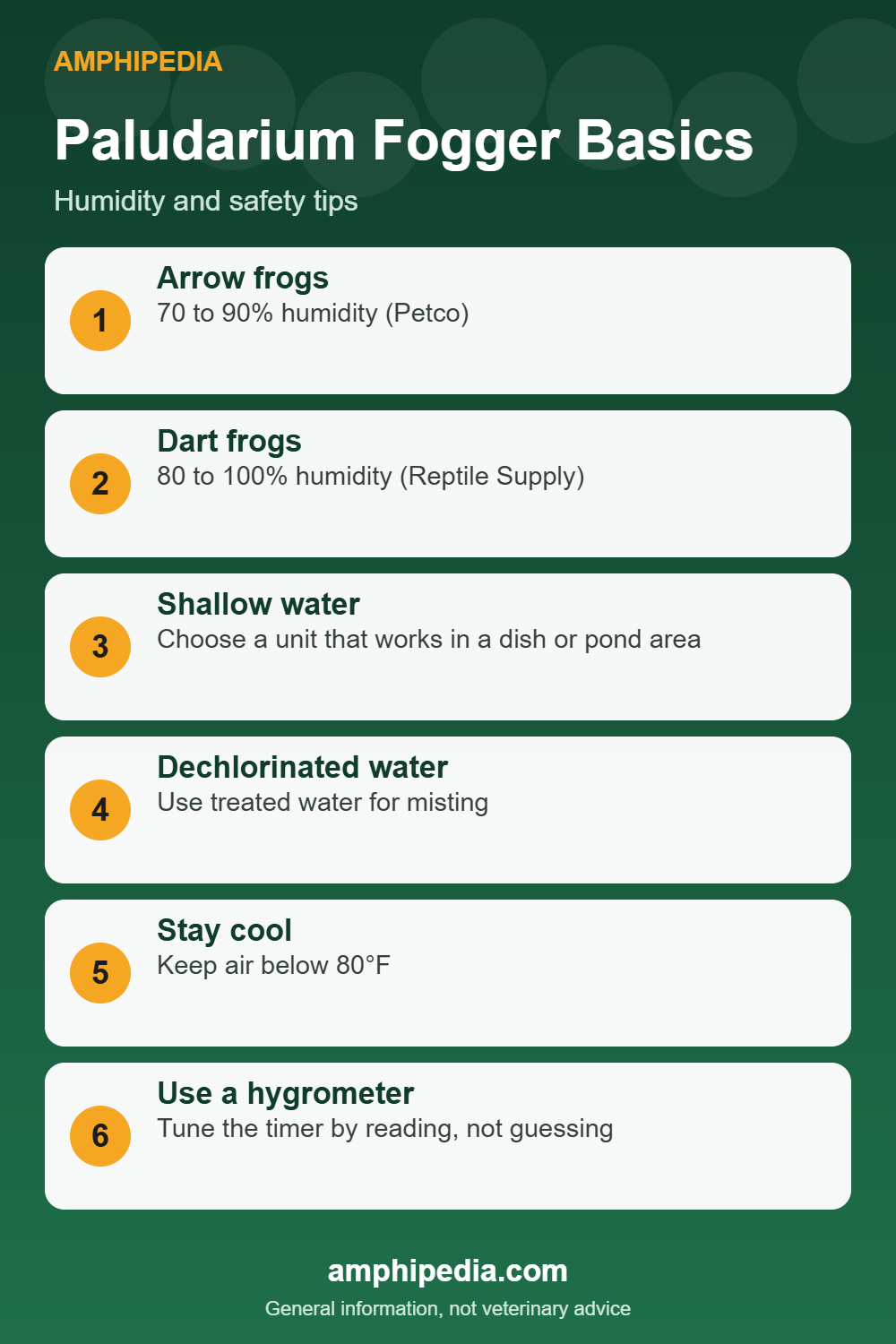
The best fogger for a paludarium is an ultrasonic mist maker that fits a shallow water dish or the pond area, gives a cool mist, and can run on a timer or humidity controller. Care sheets give humidity targets of 70 to 90% for arrow frogs and 80 to 100% for dart frogs. Use dechlorinated water, keep the unit clean and check a hygrometer so the tank does not stay soaking wet.
A paludarium blends land and water, so humidity is part of the design. Plants, moss and frogs all benefit from a damp, misty feel, and a fogger can add it without constant spraying.
This guide explains how foggers work, what to look for, and how to use one without making the tank too wet or too hot. It is not a product review. For compact units, see our compact fogger guide.
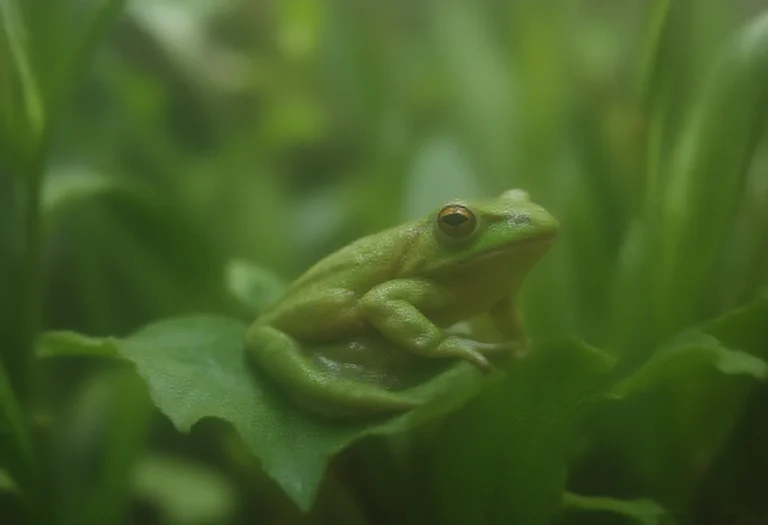
How this was made: prepared with AI assistance and checked against the sources listed at the end. Images are AI-generated illustrations, not photographs of real animals or products.
Key Takeaways
- Ultrasonic foggers make a cool mist in a shallow dish of water.
- Humidity targets differ: 70 to 90% for arrow frogs, 80 to 100% for dart frogs.
- Use dechlorinated water, as care sheets advise for misting.
- A hygrometer, not a guess, tells you when to stop.
- Clean the unit regularly and keep cords away from water.
Pin this infographicShare on Facebook
Foggers and mist makers for a paludarium
These foggers come from live Amazon listings. Check the water depth the unit needs and whether it has a timer or controller.


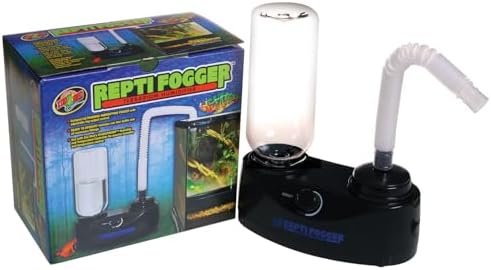


Product titles, prices and ratings are provided by Amazon and are accurate only at the time they are displayed.
What a fogger does in a paludarium
An ultrasonic fogger vibrates water into a fine cool mist. Exo Terra describes its unit as producing a cold mist that can raise air humidity up to 100% and create a low cloud effect in tropical setups.
The mist sits near the water and drifts over plants and rocks. It adds humidity, softens the look of the tank and cools the air slightly. It does not replace good ventilation or regular misting by hand.
How much humidity do amphibians need?
Petco’s arrow frog care sheet gives 70 to 90% humidity depending on species and advises misting with dechlorinated water. Reptile Supply recommends 80 to 100% humidity for dart frogs and says an automatic misting system or fogger can help.
These ranges differ. Check your species sheet and ask your breeder. A digital hygrometer shows whether the fogger is doing its job, and its reading matters more than the label on the box.
| Source | Humidity target | Note |
|---|---|---|
| Petco arrow frog sheet | 70 to 90% | Mist with dechlorinated water |
| Reptile Supply dart frogs | 80 to 100% | Fogger or auto misting can help |
What to look for in a fogger
Choose a unit that works in shallow water. Exo Terra says its fogger works in water parts such as dishes and waterfalls with depths as low as 5 cm. That suits a small paludarium pond.
Look for a design that is easy to take apart and rinse, with a cord long enough to reach a safe outlet. A timer or plug-in humidity controller helps avoid overshooting.
- Works in shallow water.
- Cool mist with no heating element.
- Easy to open and rinse.
- Adjustable output or a controller.
- Compact size that fits the tank.
- Power cable with a drip loop.
Placement and setup
Place the fogger in a corner of the water area, not directly under the lamp. Aim the mist across the tank, not at one plant or a single spot.
Run it in short bursts at first, and watch the glass. Heavy condensation all day means the output is too high or ventilation is too low.
- Rinse the fogger with clean water.
- Fill the water area with dechlorinated water.
- Place the unit in shallow water, away from the lamp.
- Run it for short bursts and read the hygrometer.
- Adjust the timer until humidity sits in your species range.
- Leave some ventilation so air can move.

Water type and cleaning
Care sheets advise misting with dechlorinated water. A pet-trade article warns that amphibians are highly sensitive to pesticides, disinfectants and chemicals in household water pipes, so treat tap water first. See our dechlorinator guide.
Check the maker’s manual for water type and cleaning steps. Rinse the unit at each water change and wipe away any film or residue so it does not recirculate into the tank.
Planning the layout around a fogger
Decide where the mist should travel before you build the tank. Open areas above the water let it spread, while dense plants right beside the unit can trap moisture and turn leaves slimy. Leave a gap between the fogger and the glass so condensation does not run behind the back wall.
Place sensitive plants and hides where air moves a little. A small vent or screen top lets fresh air in and stale air out. If the tank has a closed glass lid, open it for a while each day.
- Keep the mist path clear of dense planting.
- Leave a gap between the unit and the glass.
- Provide a vent or screen section for airflow.
- Place hides on drier ground so animals can choose.
When a fogger is not needed
A small paludarium with a closed lid, live plants and a large water area may hold humidity on its own. In that case a fogger adds cost and cleaning with little gain.
Test first with a hygrometer for a week. If readings stay in your species range, skip the fogger. If they drop after misting stops, a fogger on a timer may be worth adding. Hand misting is also fine for small tanks.
Temperature and other equipment
Fog is cool, but the tank still needs a safe temperature. Petco advises a gradient from 68°F to no more than 80°F and warns that brief exposure above 80°F can be fatal.
Pair the fogger with a thermometer and hygrometer. For stable humidity, see the humidity stabilizer guide, and for waterfalls the paludarium pump guide.

Common mistakes
The usual mistake is running the fogger non-stop. A constantly soaked tank invites mould and can stress animals, especially if airflow is poor.
Another is leaving the water dirty. A fogger spreads whatever is in the water.
- Running it 24 hours a day without a hygrometer.
- Using untreated tap water.
- Blocking all ventilation.
- Putting the unit near a hot lamp.
- Forgetting to rinse the unit regularly.
Hygiene and safety
The CDC says tank water and equipment can carry Salmonella. Wash your hands with soap and water after handling the fogger or water.
Keep plugs and sockets well above the water, and clean equipment outside the kitchen.
The mineral question: what water goes in the fogger
The US Environmental Protection Agency says ultrasonic humidifiers are very efficient at dispersing tap water minerals into the air, which can appear as a white dust on surfaces. It adds that minerals can form scale, which can become a breeding ground for microorganisms, and that lower-mineral water reduces exposure.
The EPA names distilled water as the most effective option for home humidifiers. For amphibians the advice goes the other way. The MSD Veterinary Manual pet owner page says distilled water should not be used in amphibian enclosures or when handling amphibians. So the EPA advice cannot simply be copied into a frog tank.
The same page says water must be free of chlorine, ammonia, nitrite, pesticides and heavy metals. It says chlorine can be removed by circulating tap water through a carbon filter for at least 24 hours, and that chloramines need specific dechlorinating agents first. It also tells owners to read bottled water labels carefully and to test water when unsure.
Put the two together. Treat tap water as the manual says, accept that an ultrasonic unit may leave some mineral film, and clean leaves, glass and the unit more often if it appears. If the film is heavy, ask your fogger maker and an experienced keeper of your species what water they use, rather than switching to distilled water on your own.
Ventilation: a damp tank still needs fresh air
The MSD professional guide says adequate ventilation, one to two fresh air changes per hour, is needed to prevent disease. It also lists ultrasonic humidifiers as one way to give moisture to amphibian enclosures, alongside waterfalls and frequent misting.
A fogger raises humidity but does not move air. If the lid is solid and the fogger runs often, the air can turn stale and the surfaces stay wet. The EPA notes that excess moisture can encourage dust mites and molds.
- Keep a mesh or vented section of the lid.
- Run the fogger in bursts, then let the tank air out.
- Wipe condensation from the front glass if it stays all day.
- Keep the fogger from blowing mist straight at a vent, where it escapes.
A cleaning routine that fits a fogger
The EPA says to empty, wipe dry and refill portable humidifiers daily, and to clean them every third day by scrubbing away scale, deposits or film and drying the surfaces. Rinse the tank thoroughly after using any cleaning agent.
The MSD professional guide says that in quarantine, humidifiers and spray bottles must be disinfected weekly to remove potentially pathogenic bacteria. It gives a household bleach dilution for tools and housing materials, with at least 30 minutes of contact and a thorough rinse with fresh water.
A fogger in an animal tank is not a home humidifier, so there is no single rule. A sensible plan is to follow the maker’s manual, empty the unit whenever it will sit unused for a few days, and rinse until no cleaner smell remains. Never run a unit with cleaning residue in it.
- Daily: check the water level and look for film.
- Every few days: scrub the dish and the mist outlet.
- Weekly: take the unit apart and dry the parts.
- After any illness in the tank: ask your vet before reusing the unit.
Condensation and mould: what to adjust
The EPA says that if water condenses on walls or windows near a humidifier, you should relocate it, lower the setting or run it less. If the area around the unit gets damp, turn the output down or use the unit intermittently.
That advice suits a paludarium too. If mould starts on the back wall or on wood, reduce the fogger time first. Then check airflow before changing anything else.
Protecting the room around the tank
The EPA says not to humidify indoor rooms above 50% relative humidity. A tank is a small closed space, so the care-sheet targets above are for the enclosure, not the room.
Keep the tank away from walls with wallpaper, wooden furniture and electronics. Check the room with a second hygrometer, especially in winter when windows are cold. If the room reading climbs, lower the fogger run time.
Frequently Asked Questions
Do dart frogs need a fogger?
Not always. Reptile Supply says an automatic misting system or fogger can help reach 80 to 100% humidity, but hand misting also works.
What humidity does a paludarium need?
It depends on the species. Petco gives 70 to 90% for arrow frogs and Reptile Supply gives 80 to 100% for dart frogs.
Can I use tap water in a fogger?
Care sheets advise dechlorinated water for misting. Check the maker’s manual for water type.
Will a fogger make the tank too hot?
Fog is cool, but the tank still needs a thermometer. Keep it below 80°F.
How long should a fogger run?
Start with short bursts and use a hygrometer to tune the schedule.
How do I clean a fogger?
Follow the manual, rinse it at each water change and wipe away any film.
Bottom Line
The best fogger for a paludarium is a cool-mist unit that works in shallow water, is easy to clean and runs on a timer.
Use dechlorinated water, watch the hygrometer and keep temperatures below 80°F.
Sources
- Exo Terra: Fogger, accessed Ultrasonic cold mist and shallow water use
- Petco: Arrow Frog Care Sheet, accessed Humidity, temperature and misting water
- Reptile Supply: How to Care for Poison Dart Frogs, accessed Humidity target and foggers
- That Pet Place: Keeping Captive Amphibians Healthy, accessed Sensitivity to household water chemicals
- CDC: Reptiles and Amphibians, accessed Salmonella and hygiene
- US EPA: Use and Care of Home Humidifiers, accessed 12 November 2026. Minerals, white dust, cleaning, condensation, room humidity
- MSD Veterinary Manual (professional): Environment and Husbandry for Amphibians, accessed 12 November 2026. Ventilation, humidifier disinfection
- MSD Veterinary Manual (pet owner): Housing for Amphibians, accessed 12 November 2026. Water quality and distilled water



3 Comments